












Key takeaways
The 2025–2030 Dietary Guidelines for Americans recommend a protein intake goal of 1.2–1.6 grams per kilogram of body weight per day, adjusted for individual calorie needs. That’s higher than the longstanding adult RDA of 0.8 grams per kilogram.
The “bulky” physique myth is false; it takes deliberate training and a caloric surplus over a significant length of time to achieve this physique. Eating more protein alone won’t get you there.
Protein intake may need to be individualized during pregnancy and postpartum. It may also require more diligence with aging, lower appetite, calorie restriction, and regular resistance training.
Although research within this space remains limited, higher-protein diets within commonly studied ranges have not consistently been shown to harm kidney function or bone health in healthy adults.
A meaningful protein source at each meal is a smart habit. For many people, roughly 20–30 grams per meal can be a useful starting point.
Some women may struggle to meet their higher protein goals, particularly when calorie intake is low, appetite is reduced, or needs may increase during life stages such as pregnancy or older adulthood.
This article breaks through the myths and confusion surrounding protein for women. How much protein should a woman eat each day? How does daily protein intake for women shift across different stages of life? Why are myths surrounding female protein intake holding so many back?
Protein isn’t optional. Protein is fundamental to nearly every essential function in the body, from building and repairing muscle to supporting digestion, producing blood and immune cells, and maintaining a strong immune response.
Why do many women struggle to eat enough protein?
The question is not whether women need protein (protein is essential for every individual) but rather what intake best supports health at different life stages and activity levels. The adult protein RDA was designed to prevent deficiencies in most healthy people, while protein needs for women may differ based on body size, calorie intake, exercise, age, pregnancy status, and health goals.
1. Do lower calorie needs make it harder to hit a protein goal?
On average, women tend to consume fewer total calories than men. In one weight loss maintenance trial of adults who had recently lost weight, for example, men reported higher energy intake than women while physical activity was similar. Lower energy intake can make it more difficult to consume enough protein without intentionally prioritizing protein-rich foods.
For example, a 90g protein goal accounts for about 23% of a 1,600-calorie diet, compared with about 14% of a 2,500-calorie diet. The same amount of protein therefore makes up a different share of each person’s daily calories, and achieving this protein goal can be more challenging within a smaller calorie intake.
2. Does fear of “getting bulky” keep women from eating enough protein?
Many women have received societal messaging that eating more protein will automatically make them “look bulky.” That is not how eating protein works, and that’s not how muscle gain works. Protein provides the amino acids needed to build and repair tissue, but significant increases in muscle size generally require consistent resistance training, sufficient total calories, progressive overload, and time.
In other words, simply increasing protein intake does not cause a woman to develop a larger, more muscular physique. Rather, adequate protein can help support strength, recovery, satiety, and the preservation of lean mass.
3. How do diet culture and restrictive eating affect protein intake?
Body-image concerns can shape eating patterns. Many women have received messaging that equates health with eating less, avoiding certain foods, or pursuing a smaller body. This message may lead some women to underconsume calories. Therefore, it’s often harder to reach a protein intake that supports strength, recovery, and healthy aging.
In a study on body dissatisfaction and eating styles in young adult women, greater body dissatisfaction was associated with more dietary restraint and less intuitive eating, which suggests that appearance-driven food rules can make adequate, flexible nourishment harder to maintain. When calorie restriction is aggressive or long-term, protein-rich foods may be limited alongside total food intake.
4. How do menopause and age-related muscle loss change protein needs?
As estrogen declines during the menopausal transition, women experience changes in body composition, including a tendency toward reduced lean mass and increased fat mass. Estrogen appears to help regulate muscle protein turnover, the balance between building and breaking down muscle protein, although its direct effect on muscle protein synthesis is not fully understood. For postmenopausal women, maintaining adequate protein and an overall nutritious diet are important considerations alongside resistance training and appropriate calcium and vitamin D intake, although the added benefit of supplementation beyond adequate intake remains uncertain.
Harvard Health notes that women’s protein needs may shift with age and menopause, particularly as insulin resistance becomes more common and maintaining muscle becomes harder. Insulin resistance means the body’s cells respond less effectively to insulin. Because insulin resistance changes the body’s ability to metabolize carbohydrates, it is recommended that older women increase their protein and unsaturated fat intake. It also notes that osteoporosis affects women more often than men, making nutrition and muscle-supporting habits especially relevant for bone health.
How much protein do women need a day?
The adult Recommended Dietary Allowance (RDA) for protein is 0.8 grams per kilogram of body weight per day, the minimum needed to meet basic nutritional needs. However, the 2025–2030 Dietary Guidelines for Americans recommend a higher protein serving goal of 1.2 to 1.6 grams per kilogram of body weight per day, adjusted for individual calorie needs. The Guidelines also emphasize protein quality and variety, recommending nutrient-dense sources such as eggs, dairy, seafood, poultry, meat, beans, lentils, peas, soy foods, nuts, and seeds.
The right amount is not identical for every woman. One should view the above information as general reference points to inform your diet. Protein requirements for women vary by body size, activity level, calorie intake, age, pregnancy or lactation status, health conditions, and personal goals.
How much protein do healthy adult women need per day?
For active women focused on body composition, muscle maintenance, or general health, 1.2 to 1.6 g/kg per day is a reasonable target. For a 140 lb woman wondering how many grams of protein per day to aim for, that translates to approximately 77 to 102 grams.
A practical approach is to include a meaningful protein source at each meal. For example, breakfast might include eggs, Greek yogurt, cottage cheese, tofu, or a protein-rich smoothie. Lunch could include lentils, beans, tuna, chicken, tempeh, or edamame. Dinner might feature seafood, poultry, lean meat, tofu, legumes, or a dairy-based food. This supports a more even intake across the day.
How much protein do you need when pregnant or postpartum?
Protein needs rise during pregnancy to support maternal tissue growth, fetal development, and the expanding demands of pregnancy. A review in Advances in Nutrition found that protein deposition increases throughout pregnancy and is greatest during the third trimester. Here, “protein deposition” means the buildup of protein in the mother’s and baby’s growing tissues needed to support development.
Researchers used the indicator amino acid oxidation method, which estimates protein needs by measuring how much of a specially labeled amino acid the body breaks down as protein intake increases. Using this method, they estimated average protein requirements of approximately 1.2 g/kg/day in early pregnancy and 1.52 g/kg/day in late pregnancy. These research estimates are higher than the formal pregnancy RDA of 1.1 g/kg/day, but they have not replaced that official reference value.
During breastfeeding, energy and nutrient needs also rise to support milk production and maternal health. The U.S. RDA for protein during breastfeeding is 71 grams per day. This recommendation comes from a report published in the early 2000s and serves as a general reference; individual needs may vary.
The 2025–2030 Dietary Guidelines encourage breastfeeding women to choose nutrient-dense foods, including protein-containing foods, while also paying attention to nutrients such as iron, folate, iodine, choline, calcium, vitamin D, and omega-3 fatty acids. Women who are pregnant, postpartum, or breastfeeding should discuss individualized protein needs with an obstetric clinician or registered dietitian.
How much protein do women need during perimenopause and menopause?
During perimenopause and menopause, changes in estrogen levels can contribute to shifts in body composition and may increase vulnerability to losses in lean mass and muscle strength over time. Aging, reduced physical activity, inadequate energy intake, insufficient protein, vitamin D status, inflammation, and other health factors can also contribute to muscle loss.
There is no established separate protein target for perimenopause or menopause. However, the 1.2 to 1.6 g/kg/day protein-serving goal, defined by the Dietary Guidelines, may be a useful framework. A higher intake should be individualized rather than treated as a universal requirement.
Protein plays an important role in maintaining muscle and metabolic health during this stage of life, but it works best alongside resistance training. Together, adequate protein intake and strength training help support muscle protein synthesis.
How much protein do women over 50 need each day?
With age, maintaining muscle can become more challenging because our calorie needs may decrease as a result of a smaller appetite or a less active lifestyle. This can make protein-rich, nutrient-dense foods important in this stage of life, particularly with sarcopenia and anabolic resistance. Sarcopenia is the age-related loss of muscle strength, muscle mass, and physical function. Anabolic resistance means muscle becomes less responsive to protein and exercise over time, making it harder to maintain or build muscle.
As women age, total calorie needs may decrease while the need for important nutrients (including protein) stays the same or increases. This makes nutrient density especially important. Guidelines encourage older adults to prioritize nutrient-dense foods, including dairy, eggs, fish and seafood, poultry, meat, legumes, nuts, seeds, and soy foods.
What are practical protein targets by weight and activity level?
Use the table below as a simple protein calculator for women: find your body weight, then read across to the target that matches your activity level. For most active women, the Active (1.2 g/kg) column represents a reasonable target. Women who train regularly or are focused on preserving lean mass may choose a higher target within the 1.2–1.6 g/kg/day guideline range, ideally tailored to activity, energy intake, and health status. Please consider consulting a registered dietitian to ensure you’re consuming the appropriate amount of protein to meet your individual needs.
| Body Weight | Minimum (0.8 g/kg) | Active (1.2 g/kg) | Performance (1.6 g/kg) |
|---|---|---|---|
| 120 lb (55 kg) | 44g | 66g | 88g |
| 140 lb (64 kg) | 51g | 77g | 102g |
| 160 lb (73 kg) | 58g | 88g | 117g |
| 180 lb (82 kg) | 66g | 98g | 131g |
| 200 lb (91 kg) | 73g | 109g | 146g |
| 220 lb (100 kg) | 80g | 120g | 160g |
| 240 lb (109 kg) | 87g | 131g | 174g |
| 260 lb (118 kg) | 94g | 142g | 189g |
How can women hit their daily protein goal?
Hitting a higher protein target does not require elaborate meal prep. These structural habits make a significant difference.
1. How much protein should you eat per meal? Start with a protein anchor
Choose the protein source first, then fill in the rest of the plate. For many people, 20 to 30 grams per meal may be a reasonable target. Reliable sources of protein include:
- Chicken breast: about 28 g of protein per 4 oz serving
- Salmon: about 30 g of protein per 4 oz serving
- Greek yogurt: about 17 g of protein per 6 oz serving
- Cottage cheese: about 14 g of protein per 4 oz serving
- Eggs: about 6 g of protein per large egg
- Tempeh: about 16 g of protein per 3 oz serving
- Firm or extra-firm tofu: about 8 g of protein per 3 oz serving
2. Should you spread protein evenly across your meals?
Spreading protein across meals can make a daily target easier to meet. Whether or not a perfectly even distribution produces superior long-term muscle outcomes remains unsettled. The goal of this tip is to ensure you are reaching your personalized protein intake goals.
3. What is the easiest portable high-protein option?
On busy days, portable protein options matter.
Protein bars and shakes vary widely in nutrient and caloric content. A bar worth keeping in rotation should deliver meaningful protein without a significant calorie burden.
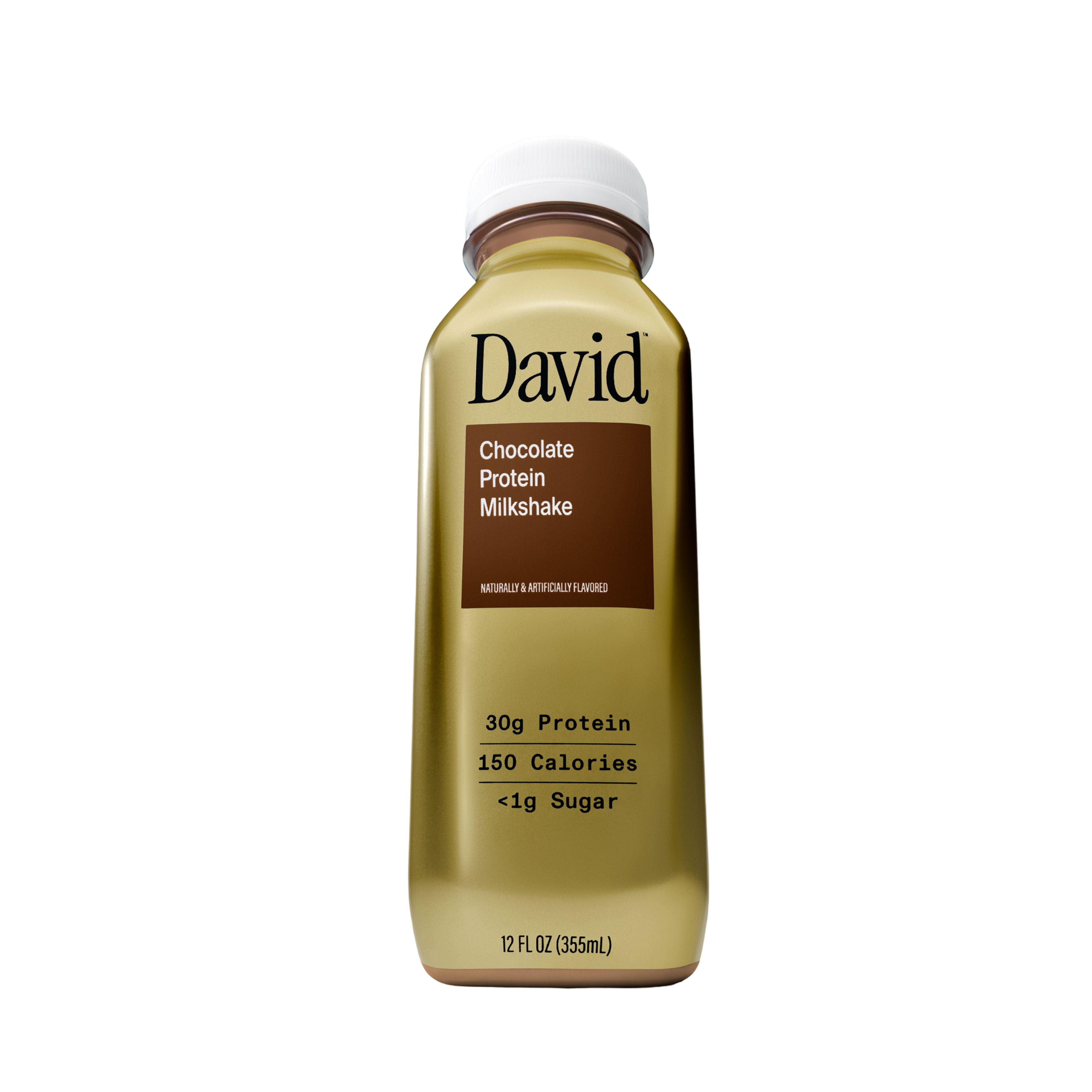
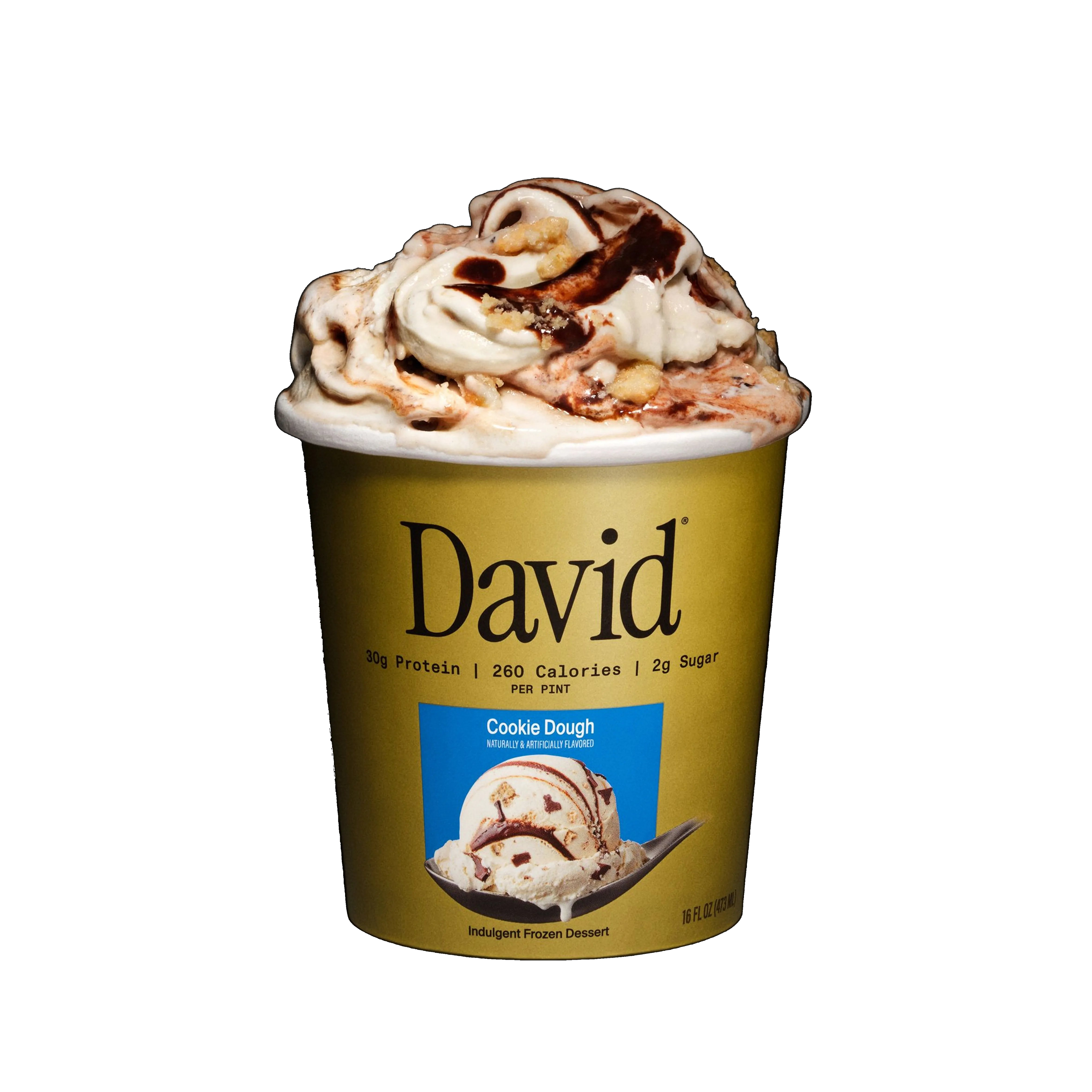
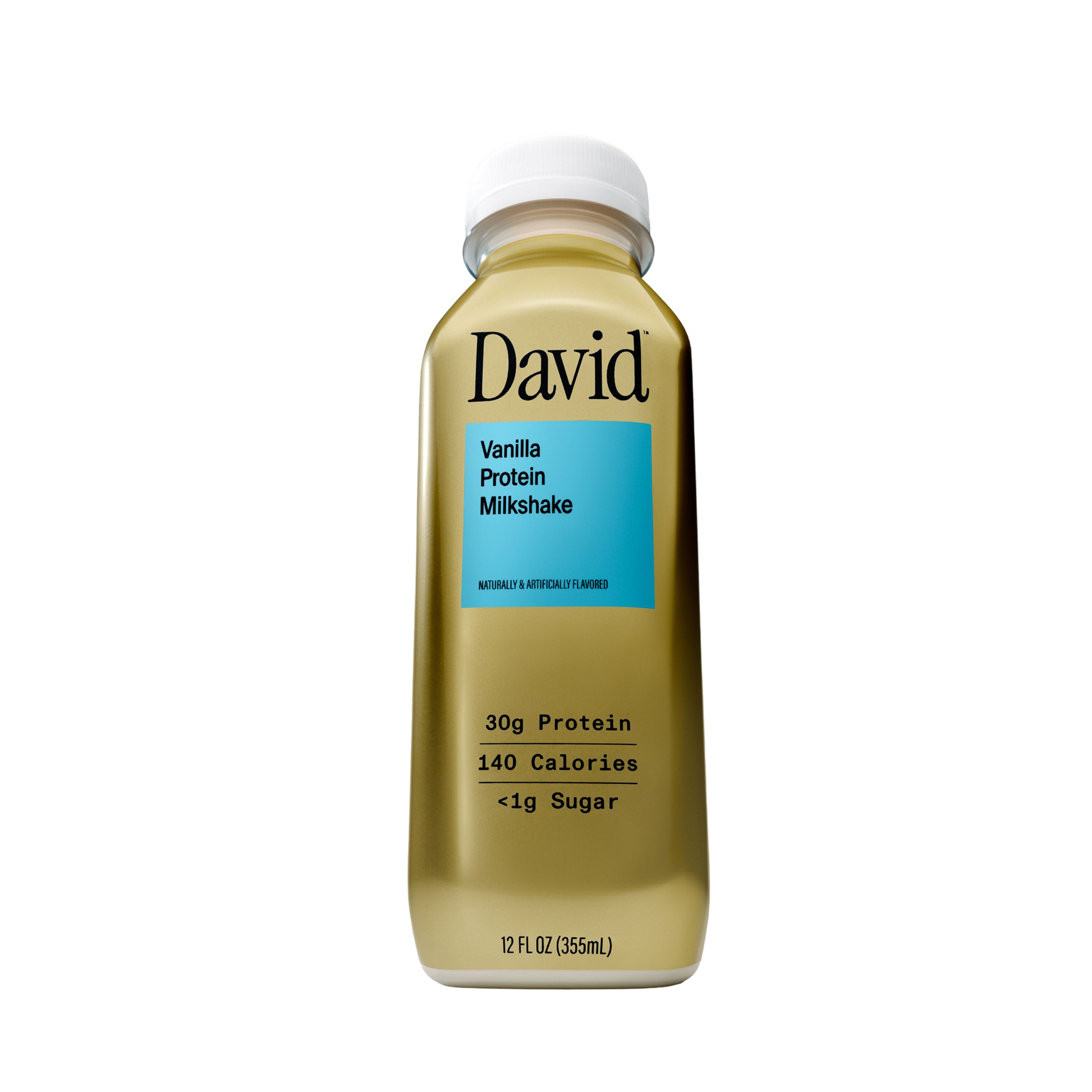
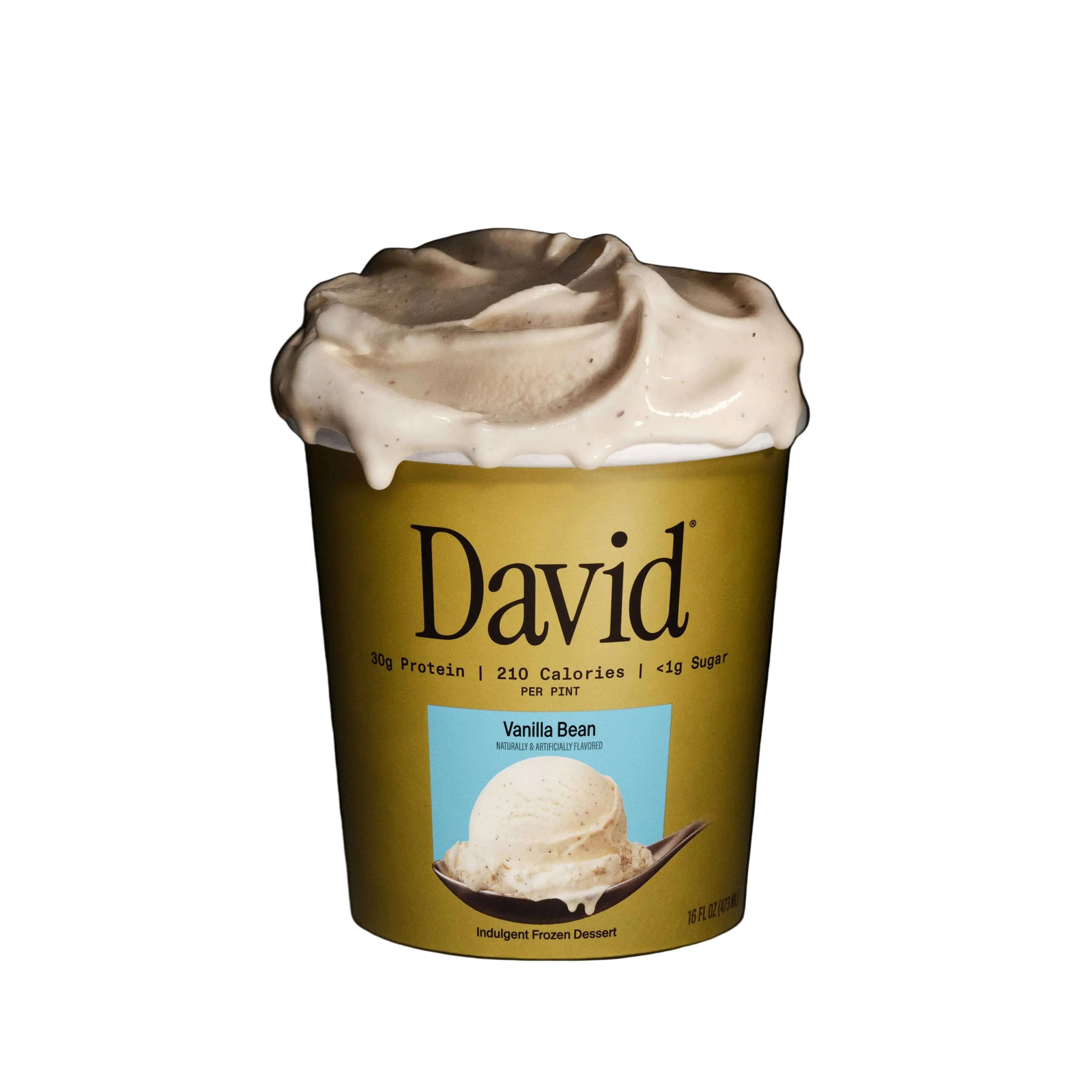
For example, David Gold offers 28 grams of protein at 150 calories, while David Shakes offer 30 grams of protein at 140 to 150 calories in a smooth, drinkable format. Both travel well and require no preparation.
What are the most common myths about protein and women?
The conversation around protein and women has long been dominated by myths, oversimplifications, and omissions. Here’s the science-backed analysis:
Does eating more protein make women “bulky”?
No. This is one of the most persistent and unsupported myths in fitness and nutrition.
Building significant muscle bulk generally requires higher testosterone levels, a sustained caloric surplus, and deliberate training. Women generally have lower circulating testosterone than men, but muscle gain still varies widely with training, nutrition, genetics, and time. Without that hormonal environment, developing large muscle mass through diet and standard resistance training is extremely difficult, regardless of protein intake.
What protein does support (when paired with consistent resistance training) is healthy muscle maintenance and lean muscle growth, neither of which produces the bulk some women may be concerned about.
Eating more protein does not cause weight gain on its own. Weight gain requires consuming more calories than the body expends. Because protein is generally more satiating than an equal-calorie amount of carbohydrate or fat, increasing it may help some people manage appetite and reduce energy intake.
Is protein bad for women’s kidneys?
Protein is an essential nutrient required to sustain life. As protein-forward diets have grown in popularity, questions have emerged about whether increased protein intake could harm kidney function. Research shows that higher protein intake increases the rate at which the kidneys filter blood (glomerular filtration rate), but this has not been shown to cause kidney injury in individuals with healthy kidney function. It’s worth noting that long-term studies on high protein intake across a person’s lifespan are still limited, and researchers continue to call for further research in this area.
As with any significant dietary change, individuals with kidney disease, diabetes, hypertension, or other conditions affecting kidney function should consult a physician before substantially increasing protein intake.


