
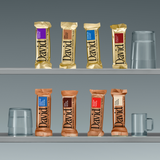










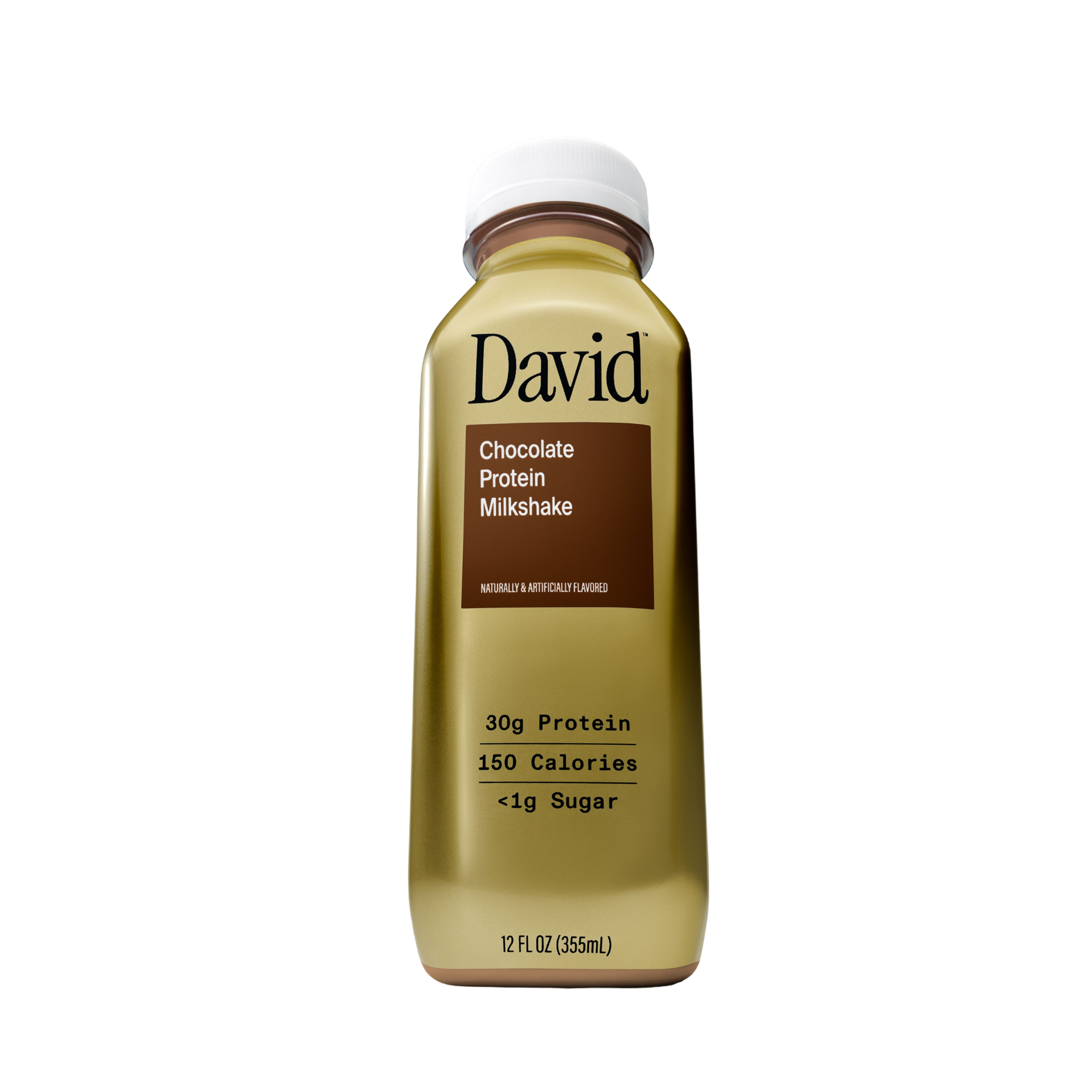





Every David product is crafted to help increase muscle and decrease fat by following three evidence-based principles: more protein, fewer calories, and minimal sugar.
This article breaks down the science behind how David thinks about nutrition, and how that thinking shows up in every David protein product.
Key Takeaways
David's mission is to help increase muscle and decrease fat through three evidence-based nutrition principles: eat enough protein, avoid excess calories, and minimize added sugar.
Protein density, or percent of calories from protein (CFP), is the primary goal, not just total protein.
Better body composition is a functional health priority, not just an aesthetic one.
David products exist to make high-protein eating practical, not to replace whole foods.
David's Core Nutrition Philosophy
David's core mission is to create tools that help increase muscle and decrease fat. This mission is grounded in a clear, evidence-based nutrition philosophy.
According to our nutrition philosophy, a healthy diet consists of the following three core principles.
Principle 1: Eat Enough Protein
Protein supports multiple physiological functions critical for body composition. It:
- Provides amino acids necessary for muscle protein synthesis—the biological process through which skeletal muscle tissue is maintained and expanded.
- Produces higher satiety per calorie compared to carbohydrates or fats, documented across numerous studies.
- Supports lean body mass retention through net protein balance during fat loss, especially when paired with resistance training.
Principle 2: Avoid Consuming Excess Calories
Energy balance governs fat accumulation. When caloric intake exceeds total daily energy expenditure, surplus energy is stored primarily as adipose tissue. Said simply, you must burn more calories than you consume to lose weight.
This relationship follows the first law of thermodynamics. Fat gain results from sustained positive energy balance, regardless of macronutrient composition.
Principle 3: Minimize Added Sugar Consumption
Added sugars contribute calories without corresponding increases in satiety or nutrient density.
Foods high in added sugars demonstrate poor satiety-to-calorie ratios, increasing the likelihood of overconsumption. Liquid sugars and rapidly digested carbohydrates produce a generally weaker satiety response relative to their caloric content.
Reducing added sugar decreases total caloric intake without requiring equivalent reductions in food volume or satisfaction.
How David Applies These Principles
These three principles are simple but powerful. The reason any diet actually works can usually be traced back to these core principles. Every David product is designed to deliver as much protein as possible with as few calories as possible. Low sugar is non-negotiable.
David applies the three core principles through a consistent formulation hierarchy:
- Maximize protein content
- Minimize total calories
- Eliminate or drastically reduce added sugars
This hierarchy remains constant across all products.
Maximize Protein Content
Protein density, the percent of total calories that come from protein (CFP), serves as the primary formulation metric.
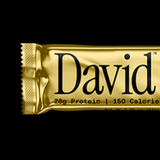
David Gold protein bar example:
- 28 g protein × 4 calories per gram of protein = 112 calories from protein
- 112 ÷ 150 calories = 75% CFP
This represents exceptional protein density compared to conventional protein bars, which are typically 27–40% CFP.
Protein Quality
Not all protein sources are equivalent in composition or effects on the body. Nutritionists and researchers use scoring systems like PDCAAS (protein digestibility corrected amino acid score) to evaluate protein quality.
A PDCAAS of 1.0 indicates that a protein is both complete and highly digestible, supplying all essential amino acids to meet daily nutritional requirements and support metabolic function.
Examples of high-quality proteins include whey and casein (both found in milk), egg whites, and yogurt. Most plant-based proteins and others like collagen may score lower because they're missing certain essential amino acids.
This doesn't mean those proteins are bad or should be avoided: David Gold protein bars achieve a 1.0 PDCAAS by strategically combining protein sources. The incomplete protein source of collagen is paired with one or more proteins that supply the essential amino acids it lacks. Together, these proteins create a complete and highly digestible source of protein, ensuring optimal amino acid availability for muscle synthesis and metabolic function.
Strategic Calorie & Sugar Reduction
Virtually all foods contain combinations of three primary macronutrients: protein, carbohydrates, and fat. Each provides energy to the body, measured as calories. Typically, protein and carbohydrates each contain about 4 calories per gram usable by the human body, while fat contains approximately 9 calories per gram.
To maximize protein while minimizing calories, David leverages unique categories of ingredients that are not metabolized like their traditional macronutrient counterparts, helping lower the calorie load of food without sacrificing satisfaction.
- Sugar Alcohols: Sugar alcohols are carbohydrates derived from fruits and vegetables. We use maltitol, which provides only about 2.7 calories per gram compared to the usual 4 calories per gram from most carbohydrates.
- Allulose: Allulose is a naturally occurring sugar present in some fruits and other plant matter. Allulose has only about 0.4 calories per gram and a negligible blood glucose impact, providing sweetness without the downsides of traditional sugar.
- Modified Plant Fat: EPG or esterified propoxylated glycerol is a modified plant fat that mimics the rich texture and mouthfeel of traditional fat sources. It contains only 0.7 calories per gram compared to the typical 9 calories per gram found in traditional fats, solving the problem of excess calories in most protein bars.
Ingredients like these are effective tools in lowering the caloric content of foods without sacrificing the satisfaction of consuming those foods. This allows David to deliver high protein density while maintaining palatability and texture.
Evidence Over Trends
David distinguishes between evidence-informed decisions and evidence-based conclusions. Every nutritional claim is supported by high-quality research. This commitment to evidence shapes every formulation decision.
The value of an ingredient comes from evidence-based research on how it affects the body, not how it sounds on a label. For example, classifications like "natural" or "processed" are rather arbitrary distinctions when assessing the demonstrated causal links to increasing muscle, decreasing fat, or supporting long-term health.
Function Determines Value
Each ingredient must demonstrably contribute to one or more core principles:
- Increase protein content
- Reduce caloric density
- Minimize sugar content
- Support palatability and texture without compromising nutritional targets
Efficacy
An ingredient must demonstrate its claimed benefit through high quality experimental evidence. Marketing claims, testimonials, or mechanistic rationale are insufficient. Statistical significance alone is not enough—observed effects must translate into meaningful outcomes.
Safety
Both acute and chronic safety profiles must be established through evaluation of potential adverse effects, assessment of interactions with other compounds, and documentation of tolerance across diverse populations.
David adheres to strict quality standards and undergoes third-party testing to verify the safety and integrity of its products. All products are tested to confirm that the amount of protein in the product matches the label. David protein bars are also tested for heavy metals, bisphenols, phthalates, and PFAs.
Real-World Applicability
This is a critical consideration. Even if a study finds a statistically significant effect, David evaluates whether that effect matters in practice. For example, a body composition study may report a statistically significant 0.1 kg difference in lean mass. While statistically significant, this effect is physiologically negligible and would not justify ingredient inclusion. The magnitude of effect must be meaningful to humans, not just present in statistical tables.
Why Body Composition Is Important
Increasing muscle and decreasing fat aren't just aesthetic goals, they're the foundation of long-term metabolic health and optimal functioning.
Metabolic Health
Body composition changes are strongly associated with critical markers of metabolic health, including improved insulin sensitivity, enhanced glucose homeostasis, and favorable lipid profiles. Skeletal muscle serves as the primary site of glucose disposal and contributes substantially to resting metabolic rate and metabolic flexibility.
Physical Resilience
Higher muscle mass correlates with improved physical function and performance, reduced risk of sarcopenia in aging populations, enhanced metabolic capacity, and greater physical resilience.
Health Risks of Excess Fat
Excess body fat, particularly visceral adipose tissue, is associated with chronic low-grade inflammation, insulin resistance, increased cardiovascular disease risk, and elevated risk for metabolic disorders.
The Challenges of a High-Protein Diet
Despite well-established benefits, practical barriers prevent many individuals from achieving adequate protein intake and appropriate caloric balance in their day-to-day lives.
Barrier 1: Preparation and Portability Constraints
Lean meats, fish, eggs, and legumes typically require cooking and refrigeration. This limits utility in time-constrained or mobile contexts.
Barrier 2: Poor Satiety in Low-Calorie Options
Products formulated primarily for calorie reduction often lack sufficient protein content. This results in inadequate satiety and increased hunger between meals.
David's Solution
David builds products that make it easier to increase muscle and decrease fat, without compromising on taste or convenience.
Products are designed with high protein-to-calorie ratios. They require no preparation and remain shelf-stable. The objective is not to replace whole food nutrition, but to provide convenient, evidence-based tools that support muscle gain and fat loss.
Conclusion
Every David product is built on the same principles: higher protein, lower calories, lower sugar. While no single set of criteria defines a healthy diet, these three principles are a strong foundation to build from. Each David product functions as a tool designed to make favorable health and body composition outcomes more accessible without compromising taste or convenience.
David helps to reduce the guesswork from nutrition, making it easier to achieve better body composition and health outcomes with convenience, taste, and science-backed nutrition.


