













Most nutrition advice focuses on what to eat. Less attention goes to the harder problem: hitting your goals across weeks and months when motivation fluctuates and schedules fall apart.
That gap between knowing and doing is where most nutrition strategies fail. Here's how to close that gap.
The Knowing-Doing Gap: Why Many People Under-Eat Protein Despite Knowing They Should Not
The 2025–2030 Dietary Guidelines for Americans recommend a protein intake of 1.2 to 1.6 grams per kilogram of body weight for adults, which is almost double prior guidance. Experts have further suggested that for highly active adults or athletes, protein needs may be even higher than this range.
Most people who follow nutrition content know this yet still fall short. There are several practical reasons for this:
- High-carbohydrate foods can be cheaper and more widely available than high-protein options
- People may lack the time or skills to prepare protein-dense meals consistently
- Concerns about bulking, particularly among women, lead some to limit protein intake unnecessarily
- Many older adults experience reduced appetites. A 2019 NHANES analysis found that up to 46% of adults over 71 did not meet the basic protein intake recommendation of 0.8g/kg/day.
Closing these gaps requires changing one's food environment, not just the intention to eat healthier.
Habit Science Basics: How Defaults and Environmental Cues Reduce Friction
In The Power of Habit, Charles Duhigg describes the neurological loop that underlies all habitual behavior. He breaks it into three steps:
- Cue: the trigger that initiates an automatic behavior
- Routine: the behavior itself
- Reward: what the brain gets out of it
When these three elements become neurologically linked, a habit forms. That is precisely why habits are so difficult to change. The loop runs automatically, without conscious decision-making. It is also why good habits are just as sticky once established.
This echoes the central argument in James Clear's Atomic Habits: People do not rise to the level of their goals, they fall to the level of their systems.
Applied to nutrition, the implication is direct. Eating well consistently is not a function of daily motivation. It is a function of what the environment makes automatic.
The Protein Anchor Strategy: Build Each Eating Occasion Around a Protein Source by Default
The protein anchor strategy is straightforward: choose the protein source first at every meal, then build the rest of the plate around it.
Aiming for 25 to 40 grams of protein per meal is ideal. A 2020 Nutrients review concluded at least one meal per day should contain sufficient protein to maximally stimulate muscle protein synthesis.
Anchored meals do not need to be elaborate. Here are a few examples:
- Breakfast: 4 scrambled eggs (~25g) with a 5.3 oz container of Greek yogurt (~15g), 1.5 cup cottage cheese bowl (~42g) with fruit. Both clear 30g before any sides are added.
- Lunch or dinner: A 5 oz chicken breast (~44g), a 5 oz ground turkey bowl (~37g), or a 6 oz cod fillet with a simple side.
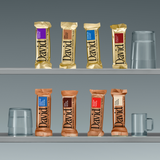
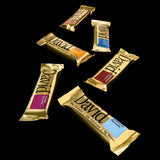
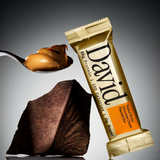
- Snack: A David protein bar (28g), 1 oz beef jerky (~10g), 1 cup cottage cheese (~28g), or 3 hard boiled eggs (~19g). The snack slot is where most people lose 20 to 30g of daily protein to habit.
Reducing Decision Fatigue: Rotating a Small Set of Reliable High-Protein Options
A high-protein meal plan doesn't need to be elaborate. Rotating 4-6 reliable anchors is enough to eliminate daily decisions without rebuilding your diet from scratch. Decision fatigue describes the measurable decline in decision quality that occurs as the number of decisions made in a day increases. A 2025 review found that decision fatigue reduces the quality and efficiency of subsequent choices by depleting mental resources. Under fatigue, individuals default to low-effort, conservative options. In food environments, that may mean whatever is most immediately available, not what best serves their goals.
The nutritional application is to reduce the number of protein-related decisions required each day. This does not mean eating the same meal repeatedly. It means rotating a small set of four to six reliable protein anchors that require minimal thought to prepare or source.
A practical rotation might include two or three breakfast options, two or three lunch and dinner proteins, and one or two snack defaults. Once established, the decision is no longer which protein to eat but simply which item from a known list.
Practical Framework: What "Consistent Enough" Actually Looks Like for Protein
Hitting your protein target on five out of seven days — and staying within 20% on the other two — is the practical standard for consistent dieting. This standard is achievable without tracking every gram indefinitely, and it is far more effective than an all-or-nothing approach that collapses under any disruption.
Counting calories and grams precisely is fatiguing, and by nature imprecise. Focus on hitting or slightly exceeding your protein target on most days. This builds in room for a rushed lunch or a weekend dinner out without derailing progress.
The Role of Convenience: Reliable Defaults
A 2024 systematic scoping review in Appetite suggested convenience may be a driver of food choice and proposed a formal definition. People do not consistently choose the most nutritious option. They choose the most accessible one.
This is not a character flaw. It is a predictable feature of how food decisions are made under time pressure and cognitive load. The response is not to try harder. It is to make the high-protein option the convenient one.
Stacking protein habits onto existing routines accelerates this. For example, if coffee is the first thing every morning, a high-protein breakfast prepared the night before becomes the path of least resistance. If a mid-afternoon slump is predictable, a protein bar placed at the desk eliminates the need to make a decision at the moment of lowest willpower.
What to Do When Defaults Break Down
Travel, social eating, and schedule disruption are predictable events that the system should account for in advance.
Here are a few reliable strategies for high-disruption days:
- Travel: Identify two or three airport or convenience store protein options in advance. Hard boiled eggs, Greek yogurt cups, and protein bars require no planning beyond the decision to look for them.
- Social eating: Protein is available at most restaurant meals. Choosing a protein-anchored entree and treating the meal as the day's primary protein source removes the need to compensate later.
- Back-to-back schedules: When there is no time for a full meal, the goal is to avoid losing 30 to 40 grams of protein to a missed slot. A portable option kept on hand closes the gap without requiring a detour.
Don't allow disruption to your routine to erase your entire system. Instead, use these as tests for whether the fallbacks you have in place are working towards helping you remain consistent.
Make Protein Intake a Habit, Not a Decision
The most reliable nutrition strategy is one that runs in the background. When protein defaults are built into the environment, hitting the daily target stops being a willpower exercise and becomes a function of the system.
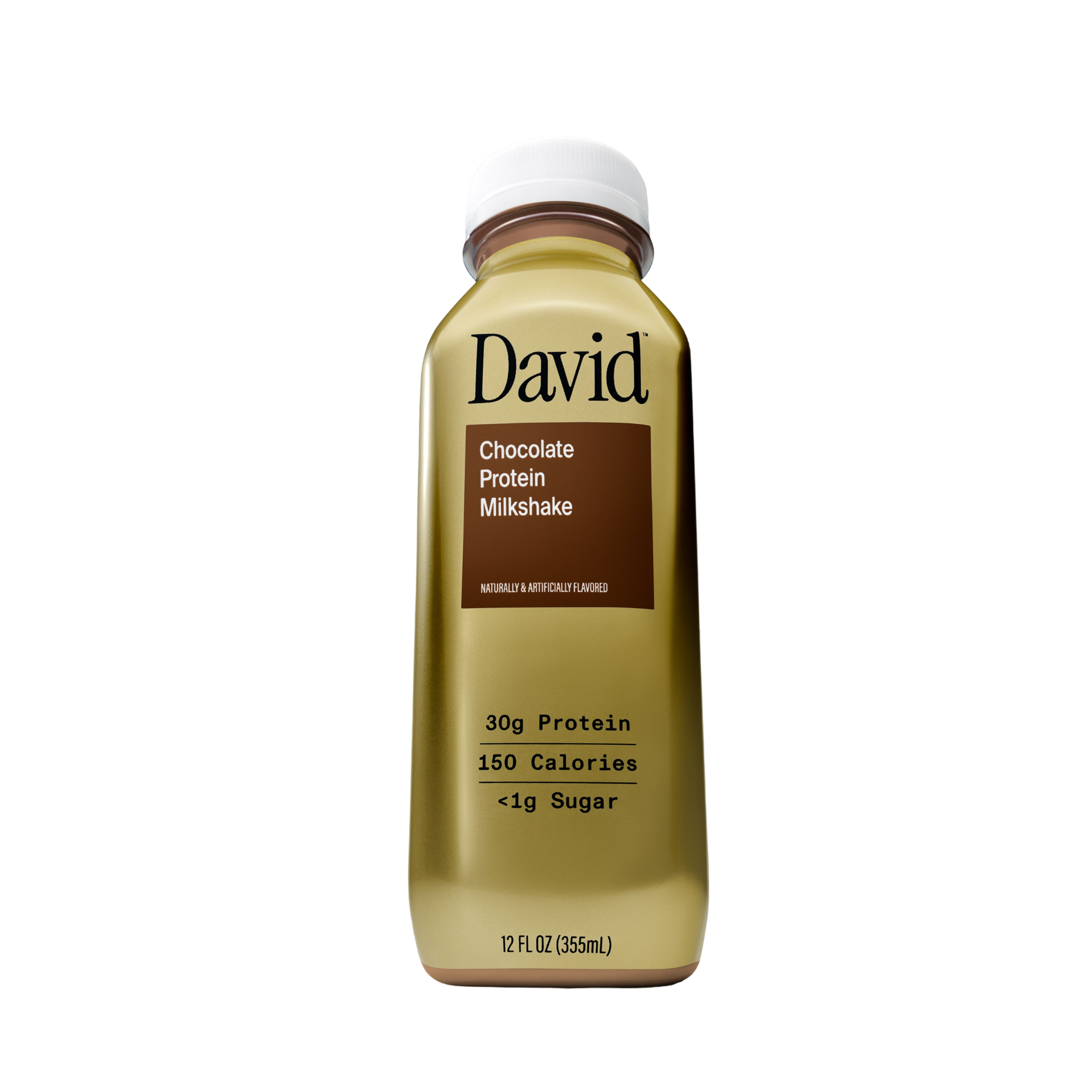
A David subscription removes one more decision from that system. Your bars arrive on your schedule and means the snack slot is covered before the day begins. It is one fewer thing to source, decide, or remember.


