












Key Takeaways
-
Calories from protein (CFP) refer to how much of your daily energy intake comes from protein, not just how many grams you eat.
-
Protein is uniquely efficient compared to carbs and fat: it has a higher thermic effect, supports satiety, and helps preserve lean muscle during weight loss.
-
A simple way to identify protein-dense foods is to look for at least 1 gram of protein per 10 calories, or roughly 40% of calories coming from protein.
-
Hitting your daily protein target matters more than optimizing exact macro ratios. Prioritize protein-dense foods, stay within your calorie budget, and let consistency drive results.
Protein is one of the three essential macronutrients, the other two being carbohydrates and fat, that your body gets from food. While all three fuel your body with energy, they don't impact your body in the same way. The term "calories from protein" (CFP) refers to how much of your total calories come from protein rather than carbs and fats. And that matters because protein provides the building blocks to cells. It also plays a role in appetite regulation, muscle mass preservation, and recovery, especially when looking to lose weight.
Understanding how to calculate the ratio of protein to calories helps you make more informed nutrition decisions. Instead of focusing solely on total calories, you can quickly assess how protein-dense a food is and whether it meaningfully contributes to your daily protein target. The next time you're eating out or grabbing a snack on the go, you can choose foods that support your training, body composition, and health goals.
Why Protein Calories Are Important
There are four calories in a gram of protein, four calories in a gram of carbohydrates, and nine calories in a gram of fat. Combined, these three macronutrients make up your total calorie intake and come from different types of foods: protein is found primarily in meats and dairy products; carbohydrates come from fruits, vegetables, and grains; and fats are found in foods like nuts, seed oils, and the fat present in meats and dairy.
Each macronutrient plays an important role in health and performance, and a balanced diet includes all three. But while carbohydrates and protein provide the same number of calories per gram, they're treated differently by your body; protein has a couple of unique qualities that make it more efficient, calorie for calorie.
Protein Burns More Calories
Food provides your body with energy, but it also requires energy to digest and absorb it. This is called the "thermic effect of food" (TEF), and protein has a significantly higher TEF than the other two macronutrients. Roughly 20 to 30 percent of the calories from protein are burned during digestion, compared to about 5 to 10 percent for carbohydrates and 0 to 3 percent for fat.
Protein Is More Satiating
Protein is considered to be more filling than carbohydrates and fats. In one controlled study, participants fed a high-protein diet (30% of calories from protein) reported significantly greater satiety and lower hunger compared to those on an adequate-protein diet (10% of calories from protein). The high-protein diet also produced higher post-meal GLP-1 (glucagon-like peptide-1) concentrations, a hormone that signals fullness to the brain.
However, even though some randomized studies find that high-protein meals enhance subjective fullness, they don't necessarily reduce daily food intake. Protein keeps you fuller compared to the other macros, which is helpful if you're endeavoring to lose weight, but it's not a silver bullet solution to overeating.
Protein Builds and Preserves Muscle Mass
Protein is crucial to growing muscle tissue and maintaining it if you're in a caloric deficit. One controlled trial placed two groups of young men in a 40% caloric deficit while having them perform resistance training and high-intensity interval training six days a week. One group ate 0.55 grams of protein per pound of body weight; the other ate 1 gram per pound. Both groups lost fat, but the higher-protein group lost meaningfully more (4.8 kg vs. 3.5 kg) and actually gained 1.2 kg of lean body mass, while the lower-protein group held muscle steady. That said, it was a small study, with only 40 participants, all men, and lasted just four weeks. It's a striking illustration of protein's muscle-preserving (and even muscle-building) effects when paired with intense training in a caloric deficit, but it shouldn't be treated as definitive on its own.
Stronger evidence comes from a meta-analysis of 49 randomized controlled trials involving more than 1,800 participants. Researchers found that higher protein intakes led to greater gains in both muscle size and strength among people following resistance-training programs. Notably, eating more than 0.73 grams of protein per pound of body weight showed little additional benefit.
So, How Much Protein Do You Need?
For more than 50 years, the U.S. Recommended Dietary Allowance (RDA) has been 0.36 g/lb, approximately 50 grams of protein for a 150-pound person. That's the minimum amount needed to avoid a deficiency, but about half of what experts suggest consuming for optimal health.
While exact ranges are up for debate, experts typically suggest consuming between 1.2–1.6 grams of protein per kilogram of bodyweight as a good goal for most adults, which aligns with the updated 2025-2030 Dietary Guidelines for Americans. Some experts suggest those who are active or have specific goals could benefit from diets of up to 2g/kg. That's roughly 82–109 grams (328–436 calories) for a 150-pound person at the standard range, or up to 136 grams (544 calories) for those with higher activity or specific goals. This amount helps promote fullness, muscle maintenance, and muscle recovery.
How to Calculate Calories from Protein
All the information you need to calculate calories from protein is listed on the Nutrition Facts Panel (NFP) found on packaged foods or online.
- Multiply the grams of protein by four to determine calories from protein.
- Divide the calories from protein by total calories to see what percentage of a food's calories come from protein.
Even with all of the benefits of protein, to lose or gain weight, total daily calories still matter most, and these needs vary based on factors such as age, height, body weight, and activity level. To determine your caloric intake, plug a few basic stats into an online calorie calculator, like the one provided by the Mayo Clinic.
Once you've established your calorie target, subtract the calories coming from your daily protein goal. The remaining calories can then be allocated between carbohydrates and fats. For example, a 150-pound active man may require roughly 2,400 calories per day. If he consumes 150 grams of protein, that accounts for 600 calories, leaving 1,800 calories to distribute between carbohydrates and fats.
How to Identify Protein-Dense Foods
A simple rule of thumb many people use: aim for at least 1 gram of protein per 10 calories. That works out to roughly 40% of calories from protein, and it's a quick way to assess how protein-dense a food actually is. The list below compares several common foods at a fixed 150-calorie portion so you can see exactly how they compare.
- Cod (6.5 oz): 93% calories from protein | 34g protein, 0.4g fat
- Chicken Breast (3.2 oz): 80% calories from protein | 30g protein, 1.8g fat
-
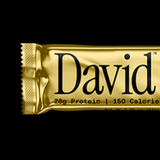
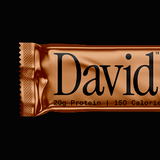
David Gold Protein Bar (1 bar): 75% calories from protein | 28g protein, 2–4g fat
- Whole Egg (~2 large eggs): 34% calories from protein | 13g protein, 10.5g fat
- Rib Eye Steak (1.7 oz): 29% calories from protein | 11g protein, 12g fat
- Black Beans (4.5 oz): 24% calories from protein | 9g protein, 1.4g fat
- Egg Noodles (3.8 oz): 14% calories from protein | 5.5g protein, 5g fat
Source: USDA FoodData Central
Prioritizing protein-dense foods makes it easier to hit your protein target without blowing through your calorie budget. Because these foods deliver a lot of protein with relatively few carbs or fats, they leave room on your plate for other foods you enjoy. That flexibility matters because the best plan is the one you can stick to consistently, and consistency is what drives results.


